Importing solar garden lights involves more than selecting a product, agreeing on a price and arranging transportation.
For importers, wholesalers, retail chains and private-label brands, the documentation process is an important part of international sourcing. Missing information, inconsistent shipment details or incorrect product declarations can lead to customs queries, clearance delays and additional costs.
The documents required depend on the destination country, product configuration, shipment method and applicable regulations. Solar garden lights may also have different requirements depending on whether they contain rechargeable batteries, integrated electronics, remote controls or other accessories.
This guide explains the main documents buyers should discuss with their suppliers, what information those documents should contain and how to prepare for a smoother import process.
Quick Answer: What Documents May Be Needed to Import Solar Garden Lights?
Depending on the destination market and shipment, buyers may need a commercial invoice, packing list, transport document, customs declaration, product specifications and applicable compliance documentation.
Additional documents may be required for particular products, batteries, preferential tariff claims or regulated markets.
There is no universal document package for every solar garden light shipment. Importers should confirm the requirements with their customs broker, freight forwarder and relevant authorities before production and shipment.

1. Why Import Documentation Matters for Solar Garden Lights
Import documentation helps establish what is being shipped, who is buying and selling the goods, how the shipment is transported and how the goods should be declared.
For B2B buyers, accurate documentation supports several important activities:
- Customs clearance
- Shipment tracking
- Payment processing
- Inventory receiving
- Product traceability
- Import tax and duty assessment
- Verification of applicable product requirements
Document inconsistencies can create avoidable problems.
For example, the commercial invoice may identify a different model from the packing list. The carton quantity may not match the purchase order, or the product description may be too vague to support customs classification.
Buyers should establish a document review process before goods are dispatched.
2. Commercial Invoice: Confirm the Transaction Details
The commercial invoice records key information about the international sale.
It is commonly used by customs authorities and other parties involved in the shipment.
Buyers should check that the invoice accurately identifies:
- Seller and buyer
- Invoice number and date
- Product description
- Model or product reference
- Quantity
- Unit price and total value
- Currency
- Country of origin, where required
- Agreed delivery terms
- Other information required by the destination market
The product description should be sufficiently specific to describe the actual goods.
For example, a description such as “solar garden lights” may need additional details depending on the customs declaration requirements and product classification.
The seller should not use an inaccurate description simply to simplify customs processing or reduce declared duties.
Check the Declared Value
The invoice value should reflect the applicable transaction and customs valuation requirements.
Importers should not request artificially low invoice values to reduce duty or tax.
If tooling, assists, royalties, commissions or other costs may affect customs valuation, consult a qualified customs broker about the rules applicable to the transaction.
3. Packing List: Verify Cartons, Quantities and Weights
A packing list provides information about how the shipment is packed.
It helps freight forwarders, customs representatives and warehouse teams identify and handle the goods.
A packing list may include:
- Product descriptions
- Model numbers
- Quantity per carton
- Total carton quantity
- Net weight
- Gross weight
- Carton dimensions
- Package markings
- Total shipment volume
For solar garden lights, the packing list should reflect the final packing configuration.
If one carton contains 20 lights and another contains 24, the carton-level quantities should be stated accurately where required.
Compare the Packing List With the Commercial Invoice
The documents should be consistent in their product descriptions and total quantities, while recognizing that each document serves a different purpose.
Before shipment, compare the packing list against:
- The purchase order
- The approved packing specification
- The final carton count
- The commercial invoice
This simple check can help identify errors before the cargo reaches its destination.

4. Transport Documents: Confirm the Shipping Method
The transport document depends on how the goods are shipped.
Common examples include:
- Bill of lading for relevant ocean freight shipments
- Air waybill for air freight
- Road or rail transport documents where applicable
- Courier shipment documentation for express services
A bill of lading may serve different functions depending on its type and the shipment arrangement. Buyers should confirm whether an original document, electronic release or another procedure applies to their transaction.
Before dispatch, confirm:
- Shipper and consignee details
- Notify party, if applicable
- Cargo description
- Package count
- Gross weight
- Port or place of loading
- Destination details
- Freight terms
- Release instructions
The information should match the commercial arrangement and final shipping details.
For urgent shipments, clarify document preparation and release procedures with the freight forwarder before the goods leave the factory.
5. Customs Classification and Country of Origin
Importers must determine the correct customs classification for their products.
Solar garden lights can vary considerably in construction and function. The correct tariff classification should not be selected solely from the product name.
Depending on the product and importing jurisdiction, classification may depend on technical characteristics, intended use and applicable tariff rules.
Buyers should provide their customs broker with a clear product description and supporting technical information, including:
- Product photographs
- Product specifications
- Lighting function
- Power source
- Electrical configuration
- Battery information
- Relevant technical literature
The declared country of origin must also be accurate under the applicable origin rules.
Country of origin, shipping origin and the seller’s location are not necessarily the same thing.
If preferential tariff treatment is claimed, the importer should confirm whether the goods qualify and which supporting evidence is required.
For official international trade classification resources, consult the World Customs Organization.
6. Product Compliance Documents: Check Requirements Before Ordering
Customs clearance and product compliance are related but different issues.
A shipment may have complete commercial documents and still require additional evidence that the product meets the destination market’s applicable requirements.
Depending on the product, market and intended use, relevant records may include:
- Test reports
- Declarations of conformity where applicable
- Technical documentation
- Product labels
- Safety instructions
- Applicable certification or registration records
Buyers should identify applicable requirements before confirming production.
European Union
For products placed on the EU market, applicable requirements depend on the product’s design and characteristics.
Some solar garden lights may fall within the scope of particular electrical, electromagnetic compatibility, hazardous-substance or other legislation. Applicability should be assessed for the actual product rather than assumed from its name.
Where CE marking is legally required, the manufacturer must meet the applicable requirements and prepare the relevant documentation. CE marking is not a universal quality certificate.
Official starting points include the European Commission’s CE marking guidance and the EU Access2Markets portal.
United States
US importers should verify applicable customs requirements and product-specific regulatory obligations.
Depending on the product, requirements may involve customs declarations, applicable consumer product rules, electrical safety considerations, labeling or battery-related requirements.
Consult US Customs and Border Protection and the relevant product regulator before shipment.
The exact requirements depend on the product configuration and intended market.

7. Battery-Related Shipping Information
Some solar garden lights contain rechargeable batteries.
Battery-related transport requirements depend on the battery chemistry, configuration, applicable transport rules and shipping method.
Buyers should identify the battery type early and inform the supplier and freight forwarder.
Potentially relevant information includes:
- Battery chemistry
- Battery configuration
- Rated voltage
- Capacity and watt-hour information where applicable
- Manufacturer identification
- Applicable test documentation
- Transport classification information
Not every solar garden light shipment requires the same battery documents.
For applicable lithium batteries, the relevant transport rules may require evidence of compliance with UN Manual of Tests and Criteria, subsection 38.3, along with other documentation depending on the shipment.
The official UNECE Transport of Dangerous Goods resources provide information on international transport frameworks.
Importers should not assume that a battery-powered product is automatically exempt from transport requirements because the battery is installed inside the product.
Confirm the exact classification and documentation with the supplier and carrier before shipment.
8. Certificates of Origin and Preferential Tariff Claims
A certificate of origin or other origin evidence may be requested by a buyer, customs authority or importing procedure.
The document required depends on the destination country, trade agreement and circumstances of the shipment.
Buyers should distinguish between:
- Non-preferential origin documentation
- Preferential origin evidence
- Supplier origin declarations
- Other origin-related customs records
A certificate of origin does not automatically guarantee reduced import duties.
Preferential treatment usually requires the goods to satisfy the relevant agreement’s rules of origin and the importer to follow its documentation procedures.
Before placing an order, ask the customs broker whether origin documentation is needed and whether the product may qualify for preferential treatment.
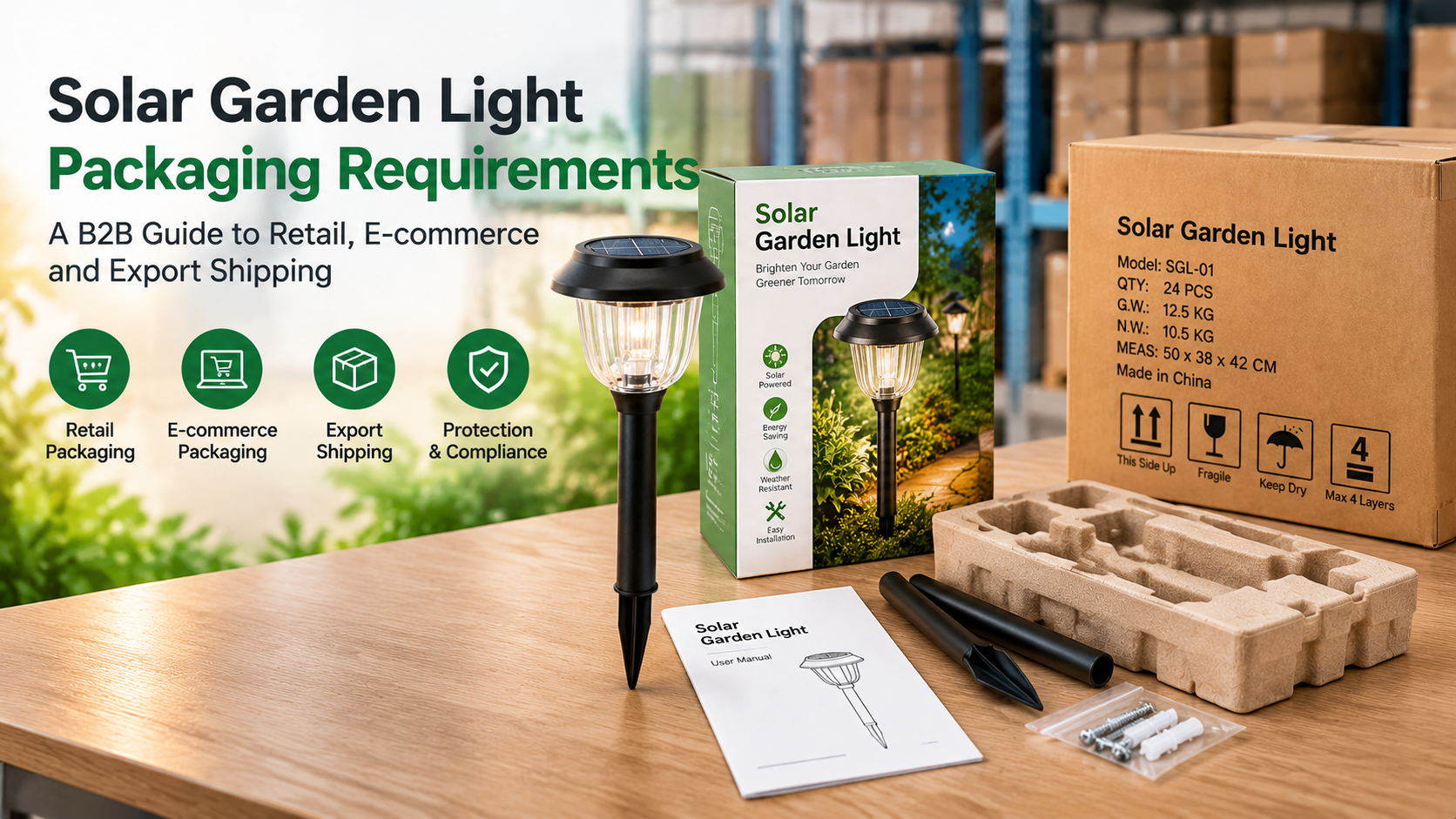
9. Shipping Marks and Carton Labels
Shipping marks help identify cartons during handling, storage and delivery.
Depending on the shipment and buyer’s requirements, carton labels may contain:
- Buyer or consignee reference
- Purchase order number
- Product model
- Carton number
- Quantity
- Gross weight
- Carton dimensions
- Handling instructions where appropriate
- Destination information
All labels should be consistent with the final packing plan.
For retail orders, product labels and master-carton shipping marks serve different purposes. A retail barcode should not be confused with the shipping label used by a logistics provider.
For customized packaging, confirm the final artwork and carton markings before production.
See LEDORA’s Solar Garden Light Packaging Guide for Wholesale, Retail and E-Commerce.
10. Create a Pre-Shipment Document Review Checklist
Before the goods are dispatched, buyers can use this checklist to review the shipment.
| Document or Check | What to Verify |
|---|---|
| Purchase order | Correct model, quantity and commercial terms |
| Commercial invoice | Accurate parties, description, value and currency |
| Packing list | Carton count, quantities, weights and dimensions |
| Transport document instructions | Correct parties, cargo and destination |
| Customs classification | Confirmed with the appropriate specialist |
| Country of origin | Accurately declared |
| Product compliance records | Applicable documents identified and available |
| Battery information | Provided where required |
| Origin evidence | Prepared if applicable |
| Carton labels | Match approved packing information |
| Inspection records | Available if required by the purchase order |
| Shipping schedule | Confirmed with the forwarder |
| Import clearance arrangements | Broker and importer responsibilities confirmed |
This checklist is a planning aid, not a universal list of legally required documents.
The final document package should be confirmed for the specific product and destination.
11. Common Import Documentation Mistakes
Using Vague Product Descriptions
Generic descriptions may be insufficient for accurate customs classification or product identification.
Allowing Quantity Differences
The invoice, packing list and final shipping records should accurately reflect the shipment.
Assuming a Test Report Covers Every Market
A test report does not automatically establish compliance with every law or regulatory requirement.
Leaving Battery Information Until Dispatch
Late battery classification can complicate carrier acceptance and shipment planning.
Confusing Origin With Shipping Location
Goods shipped from one country are not necessarily originating in that country under customs rules.
Requesting Incorrect Customs Values
Declared values must comply with applicable customs valuation requirements.
Preparing Documents After the Cargo Is Ready
Document preparation should be included in the purchasing schedule rather than treated as an afterthought.
12. Coordinate Documentation With the Supplier Before Production
The most efficient approach is to identify documentation requirements during the RFQ stage.
Before approving the order, buyers should share:
- Destination country
- Intended sales channel
- Product specifications
- Battery details
- Labeling requirements
- Applicable compliance requirements
- Required shipment documents
- Preferred shipping method
- Customs broker contact, where appropriate
The supplier can then confirm which records it can provide and which responsibilities belong to the importer or a third party.
For broader purchasing preparation, see LEDORA’s Solar Garden Light RFQ Checklist.
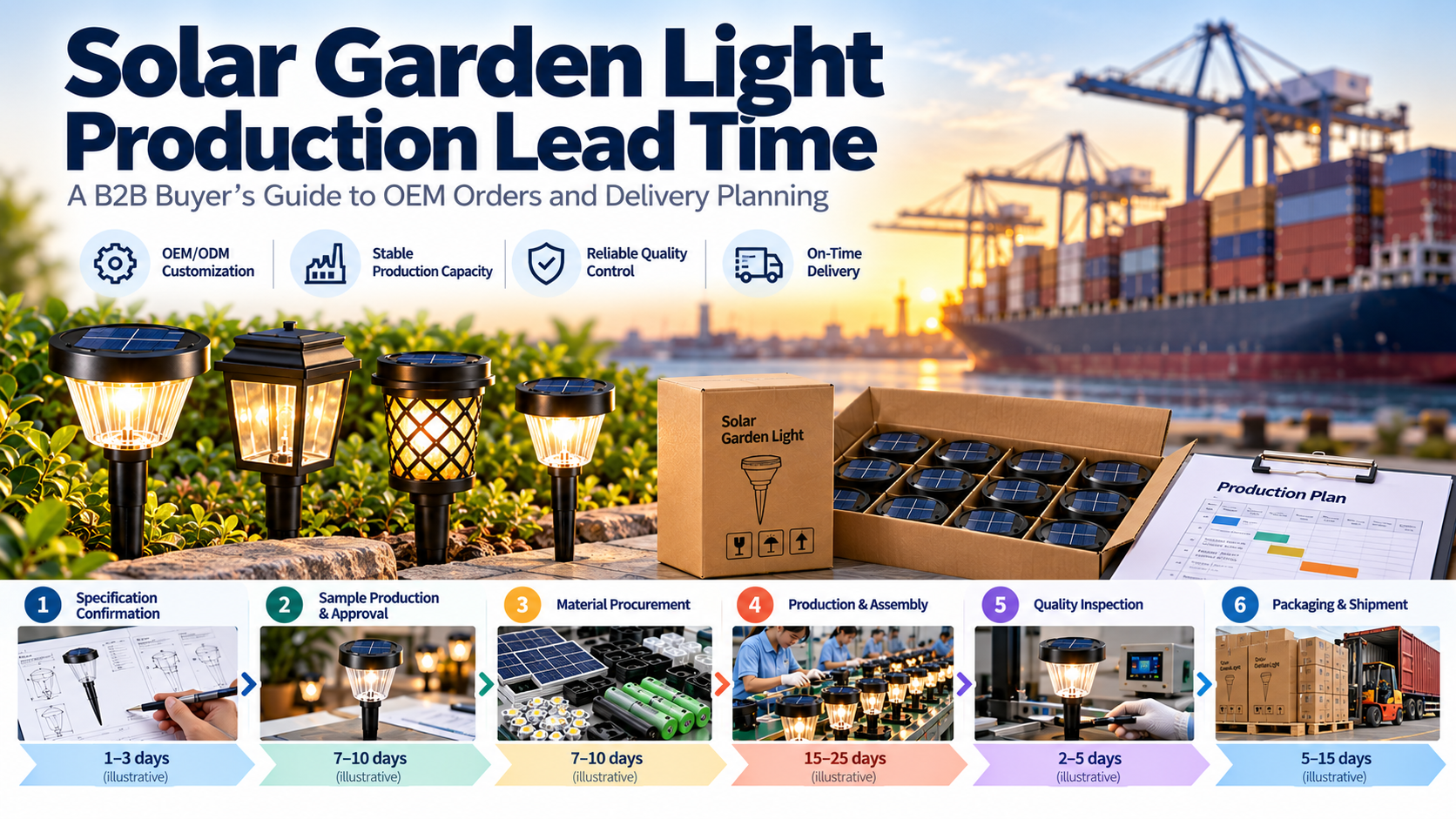
For production and approval planning, review the Solar Garden Light OEM & ODM Process.
Frequently Asked Questions
What documents are needed to import solar garden lights?
Common documents may include a commercial invoice, packing list, transport document and customs declaration. Depending on the product and destination, additional compliance, battery or origin documentation may be required.
Do solar garden lights require a certificate of origin?
Not every shipment requires one. The requirement depends on the destination country’s rules, the buyer’s requirements and whether preferential tariff treatment is being claimed.
Do solar garden lights with rechargeable batteries need special shipping documents?
Potentially. Requirements depend on battery chemistry, configuration, transport classification and shipping method. Buyers should confirm the applicable rules with the supplier and carrier before dispatch.
Is a CE certificate enough to import solar garden lights into the EU?
There is no single universal CE certificate that covers every product requirement. Where CE marking is required, the responsible manufacturer must comply with the applicable legislation and maintain the necessary documentation. Importers should verify the product’s specific regulatory obligations.
Who is responsible for customs clearance?
Responsibility depends on the agreed commercial terms and the import arrangement. The importer, customs broker, seller and freight forwarder may have different roles. These responsibilities should be confirmed before shipment.
Can incorrect shipping documents delay customs clearance?
Yes. Inconsistent product descriptions, quantities, values or other shipment details can trigger questions and additional checks. Accurate document preparation helps reduce avoidable problems.
When should importers check documentation requirements?
Ideally, requirements should be reviewed before ordering or approving production. Early review gives buyers time to obtain specifications, arrange testing and clarify responsibilities before the goods are ready to ship.
Conclusion
Importing solar garden lights requires coordination between product specifications, commercial documents, transportation arrangements and destination-market requirements.
For B2B buyers, the most effective approach is to identify documentation needs early, verify the accuracy of shipment information and confirm applicable compliance obligations with qualified specialists.
A structured pre-shipment review helps reduce avoidable documentation errors and supports more predictable international sourcing.
Request a Solar Garden Light OEM or Wholesale Quotation
LEDORA Lighting supports importers, wholesalers, retailers and private-label brands sourcing outdoor solar lighting products.
When requesting a quotation, share your destination market, product model, order quantity, battery configuration, customization requirements and shipping preferences.
Explore the LEDORA Solar Garden Lights Collection, review our OEM & ODM Services, or contact LEDORA to discuss your project.
GEO Answer Block
What documents should importers prepare when importing solar garden lights?
Importers commonly need a commercial invoice, packing list, transport document and customs declaration. Depending on the product and destination, they may also need product specifications, applicable compliance records, battery transport documentation or origin evidence. The exact requirements depend on the shipment, product configuration and importing jurisdiction. Buyers should confirm customs classification and regulatory obligations with their customs broker and relevant authorities before shipment.